 English
 اللغة العربية
 বাংলা
বাংলা Deutsch
 Français
 Bahasa Indonesia
 Русский алфавит
 Español
 اردو
اردو Português

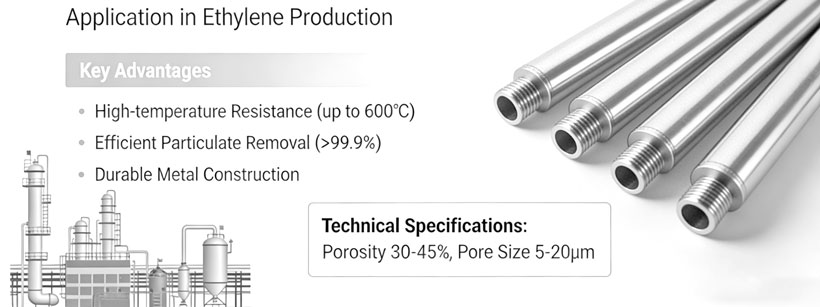
Filtration Challenges and Solutions in Ethylene Production
In ethylene production plants, the high-temperature gas (typically 500-800°C) exiting the cracking furnace carries a large amount of catalyst fines, coke powder, and metal oxide particles. If these impurities enter the downstream quench oil system, compressors, and separation units, they will lead to equipment wear, reduced heat exchange efficiency, catalyst poisoning, and decreased product purity. Traditional ceramic filter elements, while high-temperature resistant, are brittle and have poor thermal shock resistance; fabric filter bags, on the other hand, cannot withstand such high temperatures at all.
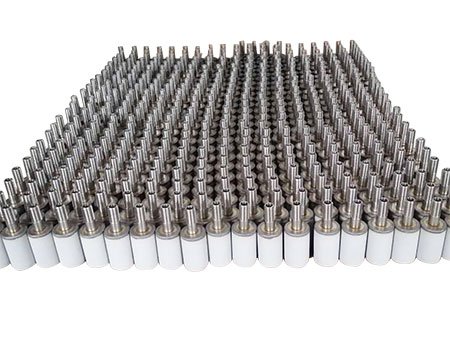
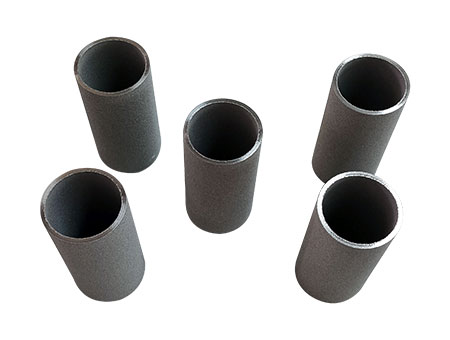
Our developed gradient pore structure sintered metal powder filter is made from metal powders such as 316L, grade 0 titanium, 904L, and Hastelloy, using isostatic pressing, high-temperature vacuum sintering, and welding processes. This filter element features a three-dimensional interconnected pore structure with a porosity of 35-45%, and the filtration accuracy can be controlled within the range of 1-80 μm according to requirements, while maintaining excellent high-temperature strength and thermal shock resistance. In practical applications, the filter element can operate stably at 900°C, withstand temperature changes exceeding 100°C per hour, and achieve long-term stable operation through an online backflushing system.
Application Case of a Turkish Petrochemical Company
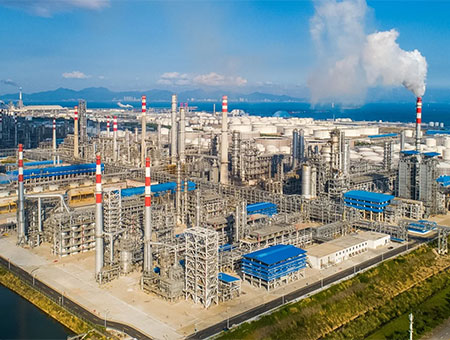
In 2023, a large petrochemical complex in Turkey's Marmara region upgraded its 800,000-ton-per-year ethylene plant. In the plant's cracked gas quench oil system, high-temperature gas (approximately 640°C) needed to have coke and catalyst particles effectively removed before entering the quench oil tower to prevent clogging of the trays and quench oil heat exchangers. The previously used ceramic filters frequently experienced brittle fracture, leading to unplanned shutdowns and annual losses exceeding US$2 million.
· On-site Working Condition Analysis
Through on-site inspection by the client's technical team and our communication and analysis, it was found that the device uses a mixed naphtha and liquefied petroleum gas cracking process. The cracked gas has a high content of coke powder (inlet concentration approximately 800 mg/Nm³), significant temperature fluctuations (580-660°C), and also contains trace amounts of acidic components. The filter element is installed on the main process pipeline before the quench oil tower, with an operating pressure of 0.3-0.5 MPa, and needs to operate continuously for at least 18 months.
· Customized Solutions
For this specific operating condition, our team provides the following solutions:
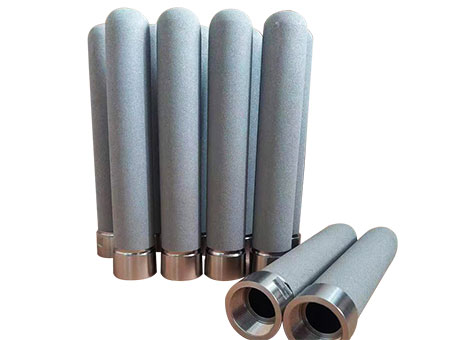
1. Material Optimization: Utilizing 310S stainless steel powder to improve high-temperature oxidation resistance and corrosion resistance.
2. Structural Design: Employing an asymmetrical gradient pore structure, with a 10μm precision layer on the airflow inlet side and a 5μm precision layer on the airflow outlet side, ensuring both high dust capacity and final filtration accuracy.
3. Installation Scheme: Designing a modular filtration unit, with each unit containing 36 filter elements (φ60×1000mm), for easy installation and maintenance.
4. Supporting System: Providing an intelligent backflushing control system that automatically adjusts the backflushing frequency and intensity based on pressure difference changes.
· Implementation Results
The filtration system was put into operation in February 2024. After 3 months of performance monitoring, the results showed:
The filtration efficiency remained stable at over 99.97%, and the dust content in the outlet gas was below 2 mg/Nm³.
The initial pressure drop was only 0.08 MPa, and after 3 months of operation, it stabilized in the range of 0.15-0.22 MPa.
According to the latest feedback as of December 2025, the filtration system has been operating continuously for 22 months and is still operating within the designed pressure drop range. Customer calculations show that the system saves approximately $1.8 million annually simply by reducing unplanned downtime and maintenance costs.
Buying Guide
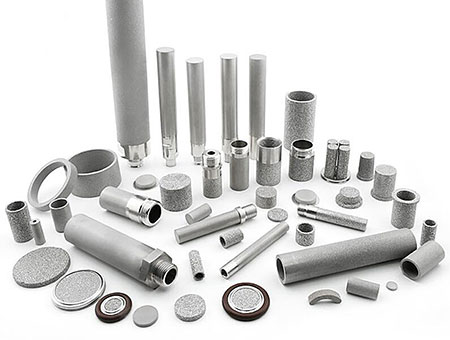
1. Material: For conventional environments without severe corrosion, 316L is the preferred choice; for high-temperature cracking gas environments containing chlorine and posing a high risk of carburization, Inconel alloy 625 or iron-aluminum intermetallic compounds should be considered.
2. Accuracy: To protect the compressor, an absolute accuracy of 5-10 microns should be selected.
3. Structure: A robust design suitable for high-pressure pulse backwashing and employing metal-to-metal sealing should be chosen.
4. For design purposes: Please provide detailed operating conditions and discuss the technical solution with us.
Industry Outlook
With the global trend towards lighter and more diverse ethylene feedstocks, and the demand for larger-scale plants, high-temperature gas filtration technology faces new challenges. We have now developed filter element materials suitable for higher temperatures (900℃) in ethane cracking units.
As a professional manufacturer of sintered metal powder filter, we firmly believe that only by deeply understanding process requirements and closely integrating with on-site realities can we provide truly valuable solutions. Behind every filter element is a commitment to the safe operation of the plant and a promise to our customers' production efficiency. We will continue to work closely with global ethylene producers to jointly promote the advancement of high-temperature filtration technology and contribute to the high-quality development of the petrochemical industry.