 English
 اللغة العربية
 বাংলা
বাংলা Deutsch
 Français
 Bahasa Indonesia
 Русский алфавит
 Español
 اردو
اردو Português

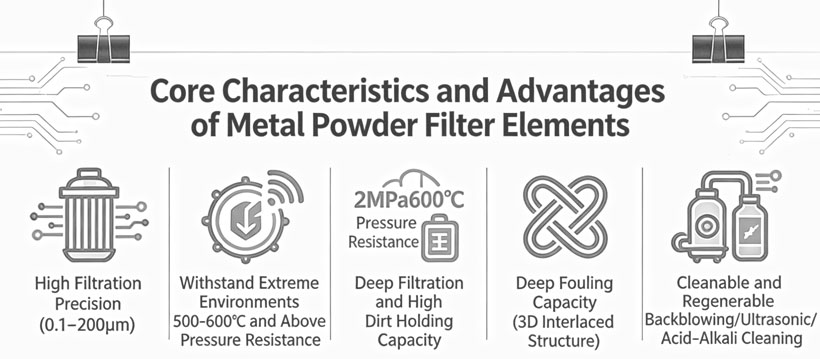
Core Advantages: Why It Becomes an Irreplaceable Choice
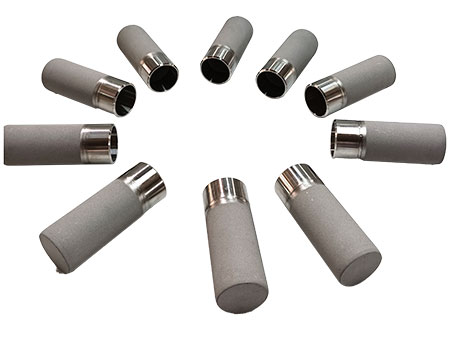
Sintered Metal Powder Filters are porous filtration components made from metal powders such as titanium and stainless steel, through mold pressing and high-temperature sintering. When used as the core diffusion unit of a gas distributor, its value is reflected in several irreplaceable aspects:
· Firstly, it integrates gas dispersion and sterile filtration into a single process
This is its core advantage. In biological fermentation, especially in pharmaceutical and food-grade fermentation, the air introduced into the tank must be absolutely sterile. Traditional systems often require a separate sterilization filter in series with the aeration head, while sintered metal powder filter can precisely control pore sizes within the range of 1 to 80 micrometers. When the pore size is designed to be 1-3 micrometers (effectively trapping bacteria), it can simultaneously break the gas into fine bubbles and perform terminal sterilization filtration. This simplifies the system and completely eliminates the risk of microbial contamination at the final stage.
· Secondly, it offers excellent mass transfer efficiency and process stability
Its three-dimensional, uniform porous structure generates a large number of uniformly sized microbubbles. Numerous studies have shown that this significantly increases the gas-liquid contact area and enhances the oxygen mass transfer rate. For example, using a sintered metal tube with a pore size of 20-25 micrometers as a distributor in an airlift reactor, the volumetric oxygen mass transfer coefficient (KLa) can reach a high level of 0.29 s⁻¹ under optimized conditions, outperforming traditional single-hole nozzles. Furthermore, its inherent high strength ensures that the pores do not deform under long-term operation and pressure fluctuations, guaranteeing long-term performance stability.
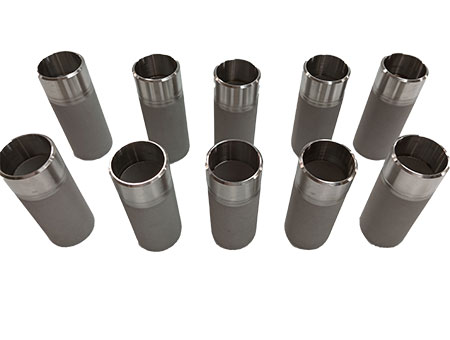
· Finally, it meets the stringent engineering requirements of biological fermentation
The fermentation process requires periodic high-temperature steam sterilization (CIP/SIP), and the complex composition of the culture medium may be corrosive. Sintered metal powder materials inherit the high-temperature resistance and corrosion resistance characteristics of the base material. For example, titanium filter elements can be used at temperatures of 500–600℃ in air and can withstand various acidic and alkaline media. At the same time, they have high mechanical strength and can be cut and welded, making them easy to integrate into various dispenser structures.
Practices of Russian Customers
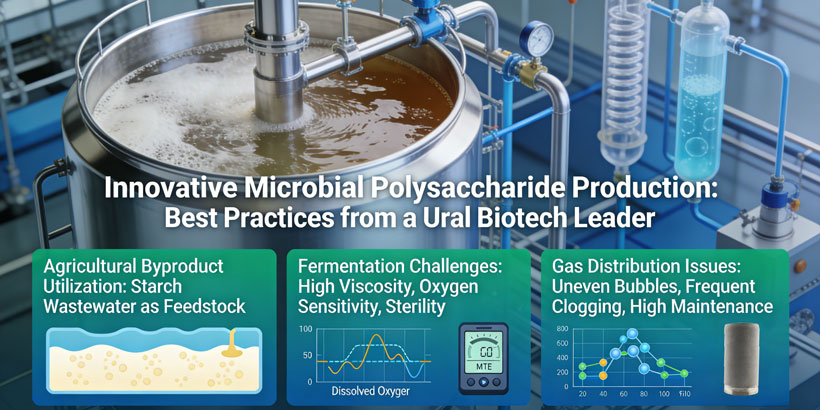
One of our clients is a large biotechnology company from the Ural region of Russia. Their company is dedicated to the industrial production of high-value microbial polysaccharides using agricultural processing byproducts (such as starch wastewater). This fermentation process is characterized by high culture medium viscosity, extreme sensitivity to dissolved oxygen control, and strict sterility requirements. Their existing gas distribution system suffered from uneven bubble distribution, frequent clogging, and high maintenance requirements, severely limiting yield improvement and production stability.
After a thorough assessment of their process bottlenecks, we customized a solution for them: a multi-tube micro gas sparger made of 316L stainless steel powder sintered material. This design offers the following key advantages:
· Precise aperture control
By controlling the filtration accuracy to 5-10 micrometers, the resulting bubbles are ensured to be small and uniform, significantly improving oxygen dissolution efficiency in high-viscosity systems.
· Overall welded structure
All interfaces utilize inert gas protected welding to ensure there are no residual dead spaces, fully meeting the hygienic requirements for in-line steam sterilization (SIP) and eliminating the risk of bacterial contamination.
· Surface optimization treatment
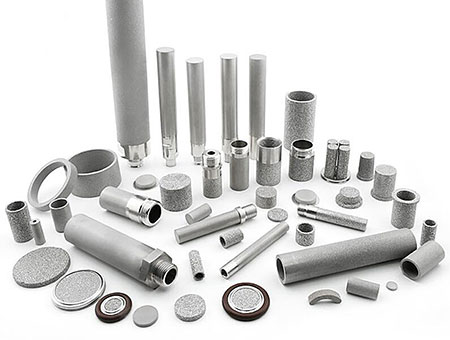
The distributor surface is specially polished, making it smooth and less prone to material buildup. This effectively reduces the adhesion of viscous substances such as polysaccharides, facilitating online cleaning and extending maintenance cycles.
Since its commissioning, this project has been operating stably for over two years. Customer feedback indicates that the new system has not only increased the average yield of the target fermentation product by approximately 15%, but has also reduced unplanned downtime due to gas distribution system failures to zero, achieving significant improvements in both economic efficiency and production reliability. This successful collaboration has become a model for our technical services in the biomanufacturing sector in Russia and the CIS countries.
Buying Guide
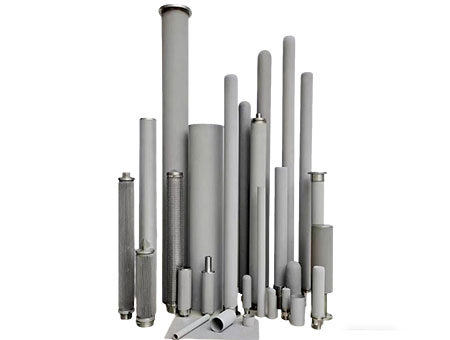
· Clearly define core functions
The primary objective is either sterile filtration or uniform gas distribution.
For sterile filtration: extremely high precision is required (0.1-1 µm).
For uniform gas distribution: the precision requirements can be relaxed (1-100 µm), with more emphasis on pore uniformity.
· Select material
316/316L stainless steel: Economical and versatile, resistant to general corrosion.
Hastelloy/Titanium: Suitable for extreme corrosive environments such as strong acids and halides.
· Determine the key parameters.
Filtration accuracy or pore size, airflow rate/pressure drop, and operating pressure are key parameters.
Accuracy and airflow rate often need to be balanced, and should be determined based on process requirements and supplier data.
Conclusion
The application of sintered metal powder filter in biological fermentation gas distributors represents a perfect combination of modern materials science and traditional biological processes. Starting from a critical point in the process, it provides a solid guarantee for the safe, efficient, and high-quality development of the global biomanufacturing industry with its exceptional reliability, precise functionality, and extensive customization capabilities. As a dedicated player in this field, we will continue to strive towards our goal of becoming an expert in sintered metal filter materials, working hand in hand with our global partners to address more complex process challenges and create a new future for biomanufacturing.